
EQIRX

Emerging Markets Equity Advantage Fund

$16.49
NAV+$0.21 / +1.29%1-day change
$431.7M
Fund assets
11.72%
Year-to-date return
5/31/2012
Fund inception date
Data as of 4/10/2026
Fund overview

A total return approach to emerging markets

The Emerging Markets Equity Advantage Fund seeks to generate total return by investing in emerging market stocks with dividend yields greater than the average for the MSCI Emerging Markets Index (Net).

The maturation of emerging markets requires a focus on earnings growth, valuation, and shareholder yield.

Key differentiators

  • Targets companies with growth potential along with current income  

  • Investment team possesses extensive cultural understanding and regional stock market experience 

  • Leverages a proprietary environmental, social, and governance (ESG) process to integrate fundamental research and estimate the equity value at risk from ESG issues 

General facts

Morningstar category

Diversified Emerging Mkts

Lipper category

Emerging Markets Funds

Ticker

EQIRX

CUSIP

94988V704

Fund number

4682

Benchmark name

MSCI Emerging Markets Index (Net)

Gross expense ratio

1.23%

(as of 3/1/2026)

Net expense ratio

1.01%

(as of 3/1/2026)

Dividend frequency

Monthly

Active share

56.67

(as of 2/28/2026)

Quick resources

Morningstar Rating™

Out of 694 funds, Diversified Emerging Mkts As of 3/31/2026


An investment’s Overall Morningstar Rating™, based on its risk-adjusted return, is a weighted average of its applicable 3-, 5-, and 10-year Ratings.

Alison Shimada: 2026 Q1 Recap and Q2 Outlook

Alison Shimada highlights emerging markets' resilience, global importance, and investment opportunities amid geopolitical challenges.

Transcript

What stood out to you during the first quarter in equities?
Alison Shimada: What stood out to us as a team was the fact that emerging markets started off the year quite strongly in January and February, before the start of the Iran war. And we expect that throughout the year, should there be a return to some more stability or better direction in the markets, that we would see interest strongly return to the asset class. The reason for that is simply because people are looking for a diversification away from the U.S., and I think that is a very intelligent idea. So, I think that interest should continue. During the first quarter, we also had the chance to see the resilience of the strategy that we manage and witness the fact that it has the potential to do relatively better than the MSCI EM (Emerging Markets) Index, I think, which is important given the fact that, in the long term, you do have two different kinds of markets: strong markets as well as weak markets. So, it was a test of the resilience of the strategy.

What are you most focused on as we move into the next quarter?
Since we are actually still in the war, we are looking for the secondary and tertiary impacts on the asset class. From the lack of oil, the lack of natural gas, and how governments really respond to this—and they have stepped up to help consumers, to help businesses so far. So, I think that one of the important points as well is the timeline and how long it's going to take to get to a better place in terms of resolution or compromise, and this will impact the severity on the economies. However, we really feel strongly that this is a new era for emerging markets. It's emerging markets 2.0. So, the economies have developed nicely over the last 20 years. It's not the same set of countries that we've had in the beginning or 20 years ago. So, we feel that they can sustain some level of damages and there haven't been no systemic risks or other types of issues at a national level so far. So, we're watching that very carefully, but we're also looking for opportunities to buy more of the stocks that we like and have high conviction on. And those would be characterized by strong operational models, good cash flow, good balance sheets, strong management, decision-making—and we do see that a lot, even now. So, I think that emerging markets really have come center stage. It is not a call option on growth anymore. It is really very central to the world economy. And, so, we are looking for these opportunities to buy.

What’s your playbook for managing geopolitical shocks like the Iran conflict?
We talk and discuss and debate all of the factors on a regular basis, on a daily basis, because things are changing very rapidly and in conflict. So, we have to make sure that we consider all of the things that are important in terms of the portfolio. And we have to be able to make decisions with regard to positioning with less-than-perfect information, because otherwise one would be potentially late in making those decisions. So, we really want to use all of our background and experience in these types of situations to replicate and enhance our decision-making.

I believe the team is well positioned to navigate through this type of crisis because quant strategies can miss the turn. Yet, we can anticipate, because of our background, our experience, or expertise, we can navigate well through this type of crisis. And we have been through this before many times. I believe also that this team is very well positioned, given its 24 years of experience and the people's backgrounds with language capability in the region, to really understand what is going on on the ground, and that will serve us very well in the years to come.

Performance

Average annual returns

Average annual returns

(as of 3/31/2026)
5/31/2012
1M
3M
YTD
1Y
3Y
5Y
10Y
Inception
Fund
-11.17
4.00
4.00
31.87
16.51
5.98
7.21
6.29
MSCI Emerging Markets Index (Net)
-13.06
-0.17
-0.17
29.55
14.84
3.69
7.80
5.67
Lipper Emerging Markets Funds
-10.26
2.61
2.61
32.33
15.10
3.57
7.78
-
Expenses (as of 3/1/2026)
Gross Expense Ratio
1.23 %
Net Expense Ratio
1.01 %

One-month, three-month and year-to-date returns are not annualized.

Figures quoted represent past performance, which is no guarantee of future results, and do not reflect taxes that a shareholder may pay on an investment in a fund. Investment return, principal value, and yields of an investment will fluctuate so that an investor's shares, when redeemed, may be worth more or less than their original cost. Current performance may be lower or higher than the performance data quoted and assumes the reinvestment of dividends and capital gains. 

Net asset value (NAV) is the value of one share of the fund excluding any sales charges.

R6 Class shares are sold without a front-end sales charge or contingent deferred sales charge.

Please keep in mind that high double-digit returns were primarily achieved during favorable market conditions. You should not expect that such favorable returns can be consistently achieved. A fund's performance, especially for short time periods, should not be the sole factor in making your investment decision.

The manager has contractually committed, through 2/28/2027, to waive fees and/or reimburse expenses to the extent necessary to cap the fund's total annual fund operating expenses after fee waivers at 1.01%. Brokerage commissions, stamp duty fees, interest, taxes, acquired fund fees and expenses (if any), and extraordinary expenses are excluded from the expense cap. Prior to or after the commitment expiration date, the cap may be increased or the commitment to maintain the cap may be terminated only with the approval of the Board of Trustees. Without this cap, the fund's returns would have been lower. The expense ratio paid by an investor is the net expense ratio (the total annual fund operating expenses after fee waivers) as stated in the prospectus.

Calendar year

Calendar year

(as of 12/31/2025)
2025
2024
2023
2022
2021
2020
2019
2018
2017
2016
Fund
28.30
10.90
12.40
-17.88
3.14
8.00
16.91
-11.31
25.11
5.25
Benchmark
33.57
7.50
9.83
-20.09
-2.54
18.31
18.42
-14.57
37.28
11.19
Morningstar
30.55
6.04
12.32
-20.86
0.38
17.90
19.25
-16.07
34.17
8.47
Growth of $10,000

Growth of a $10,000 investment

(as of 3/31/2026)

This chart shows the value of a hypothetical $10,000 investment in the fund over the specified time period up to 10 years or since its inception (for funds lacking 10-year records). The result is compared with benchmarks, which may include a broad-based market index and a peer group average or index. Market indexes do not include expenses, which are deducted from fund returns as well as mutual fund averages and indexes.

Does not include sales charges and assumes reinvestment of dividends and capital gains. If sales charges were included, returns would be lower.

Performance and volatility metrics

Performance and volatility metrics

(as of 3/31/2026)
3 Year 5 Year 10 Year
Alpha 2.49 2.41 -0.20
Beta 0.92 0.93 0.96
Excess Return 1.67 2.29 -0.59
Information Ratio 0.49 0.59 -0.14
Sharpe Ratio 0.79 0.15 0.30
R2 0.95 0.95 0.94
Tracking Error 3.38 3.86 4.23
Standard Deviation 14.57 16.21 16.46
Upside Market Capture Ratio 96.73 96.79 80.90
Downside Market Capture Ratio 88.75 92.32 97.27
Morningstar ratings and rankings

Morningstar ratings and rankings

(as of 3/31/2026)
Overall
Diversified Emerging Mkts (Out of 694 funds)
Three Year
35th percentile (243 out of 694)
Five Year
29th percentile (131 out of 617)
Ten Year
68th percentile (298 out of 461)

The Overall Morningstar Rating for a fund is derived from a weighted-average of the performance figures associated with its three-, five- and ten-year (if applicable) ratings.

Morningstar rankings represent a fund's total return rank relative to all funds that have the same category. The percentile ranking is based on the fund's total return percentile rank relative to all funds that have the same category for the same time period. The highest (most favorable) percentile rank is 1% and the lowest (least favorable) percentile rank is 100%. Morningstar rankings do not include the effect of sales charges. The absolute ranking is based on the fund’s total return rank relative to all funds that have the same category for the same time period. Past performance is no guarantee of future results.

Prices and distributions

Historical data

YTD high $17.43 2/26/2026
YTD low $14.76 1/1/2026
52-week high $17.43 2/26/2026
52-week low $11.37 4/13/2025
2025 high $15.10 10/29/2025
2025 low $10.75 4/8/2025
Best quarterly return 21.73% 12/31/2020
Worst quarterly return -26.84% 3/31/2020
Best calendar year 28.30% 12/31/2025
Worst calendar year -17.88% 12/31/2022

Distribution summary

Dividends Monthly
Capital gains Annually

Distribution history

Distribution history Type Per share amount Reinvestment price
2025-12-22 Dividend $0.23029 $14.49
2025-11-24 Dividend $0.02697 $14.41
2025-10-27 Dividend $0.02112 $14.98
2025-08-25 Dividend $0.02926 $13.68
2025-06-24 Dividend $0.03711 $12.89
2025-05-23 Dividend $0.04153 $12.57
2025-04-24 Dividend $0.00673 $11.98
2024-12-20 Dividend $0.02858 $11.86
2024-11-25 Dividend $0.06437 $12.03
2024-09-24 Dividend $0.01505 $12.54
2024-08-26 Dividend $0.01521 $12.29
2024-07-25 Dividend $0.0251 $11.85
2024-06-24 Dividend $0.02808 $12.07
2024-05-24 Dividend $0.04779 $11.99
2024-04-24 Dividend $0.02069 $11.45
2024-03-25 Dividend $0.01335 $11.37
2023-12-20 Dividend $0.03084 $10.48
2023-11-22 Dividend $0.01971 $10.36
2023-10-25 Dividend $0.01014 $9.68
2023-09-25 Dividend $0.02283 $10.07
2023-08-25 Dividend $0.01396 $10.17
2023-07-25 Dividend $0.04366 $10.78
2023-06-26 Dividend $0.04764 $10.41
2023-05-24 Dividend $0.03789 $10.14
2023-04-24 Dividend $0.01663 $10.35
2023-03-27 Dividend $0.01575 $10.16
2023-02-22 Dividend $0.02797 $10.35
2022-12-21 Dividend $0.03371 $10.00
2022-11-23 Dividend $0.00362 $9.83
2022-10-25 Dividend $0.02297 $9.09
2022-08-25 Dividend $0.04508 $10.53
2022-07-25 Dividend $0.06619 $10.36
2022-06-24 Dividend $0.05221 $10.66
2022-05-24 Dividend $0.02561 $10.93
2022-04-25 Dividend $0.01196 $11.30
2022-03-25 Dividend $0.01927 $12.02
2021-12-23 Dividend $0.09749 $12.40
2021-11-23 Dividend $0.02535 $12.56
2021-10-25 Dividend $0.02027 $12.90
2021-09-24 Dividend $0.0207 $12.75
2021-08-25 Dividend $0.05362 $12.82
2021-07-26 Dividend $0.02141 $12.82
2021-06-24 Dividend $0.06449 $13.35
2021-05-24 Dividend $0.03506 $13.15
2021-04-26 Dividend $0.01 $13.27
2021-03-25 Dividend $0.01467 $12.80
2021-02-22 Dividend $0.01425 $13.51
2020-12-21 Dividend $0.02398 $12.04
2020-11-23 Dividend $0.01434 $11.72
2020-10-26 Dividend $0.00962 $10.66
2020-09-24 Dividend $0.01943 $10.16
2020-08-25 Dividend $0.02949 $10.66
2020-07-27 Dividend $0.08035 $10.49
2020-06-24 Dividend $0.04287 $9.64
2020-05-22 Dividend $0.01945 $9.02
2020-02-24 Dividend $0.01321 $10.89
2019-12-23 Dividend $0.01545 $11.72
2019-11-22 Dividend $0.03947 $11.16
2019-10-25 Dividend $0.02203 $11.15
2019-08-26 Dividend $0.04872 $10.19
2019-07-25 Dividend $0.0632 $11.17
2019-06-24 Dividend $0.05176 $11.20
2019-05-24 Dividend $0.01302 $10.52
2019-04-24 Dividend $0.01601 $11.40
2019-03-25 Dividend $0.01594 $11.13
2019-02-22 Dividend $0.0144 $11.40
2018-12-27 Dividend $0.02607 $10.28
2018-10-25 Dividend $0.03316 $10.36
2018-09-24 Dividend $0.02671 $11.02
2018-08-27 Dividend $0.03557 $11.04
2018-07-25 Dividend $0.04888 $11.31
2018-06-25 Dividend $0.06326 $11.00
2018-05-24 Dividend $0.02029 $11.82
2018-04-24 Dividend $0.03451 $12.19
2018-03-23 Dividend $0.01825 $12.23
2017-12-28 Dividend $0.02354 $11.98
2017-11-24 Dividend $0.01107 $11.83
2017-10-25 Dividend $0.01503 $11.72
2017-09-25 Dividend $0.02074 $11.48
2017-08-25 Dividend $0.03804 $11.53
2017-07-25 Dividend $0.0494 $11.42
2017-06-26 Dividend $0.01229 $11.04
2017-05-24 Dividend $0.02608 $10.86
2017-04-24 Dividend $0.01633 $10.78
2017-03-23 Dividend $0.01491 $10.92
2016-12-29 Dividend $0.0448 $9.78
2016-11-23 Dividend $0.01338 $9.77
2016-09-26 Dividend $0.01086 $10.21
2016-08-25 Dividend $0.02721 $10.29
2016-07-25 Dividend $0.06359 $10.12
2016-06-24 Dividend $0.03629 $9.42
2016-05-24 Dividend $0.04003 $9.37
2016-04-25 Dividend $0.03197 $9.91
2016-03-24 Dividend $0.01211 $9.72
2015-12-30 Dividend $0.02436 $9.61
2015-11-23 Dividend $0.00666 $9.88
2015-10-26 Dividend $0.00724 $10.22
Download CSV

Composition

Portfolio statistics

Portfolio statistics

(as of 2/28/2026)
Fund Benchmark
Number of Holdings 109 1195
Median Market Cap 22.91 12.04
Dividend Yield 2.31 2.05
P/E (1-year EPS forecast) 12.70 13.18
P/B Ratio 2.43 2.47
EPS Growth 14.52 16.06
Return on Equity 21.15 20.32
Portfolio Turnover 55.97 -

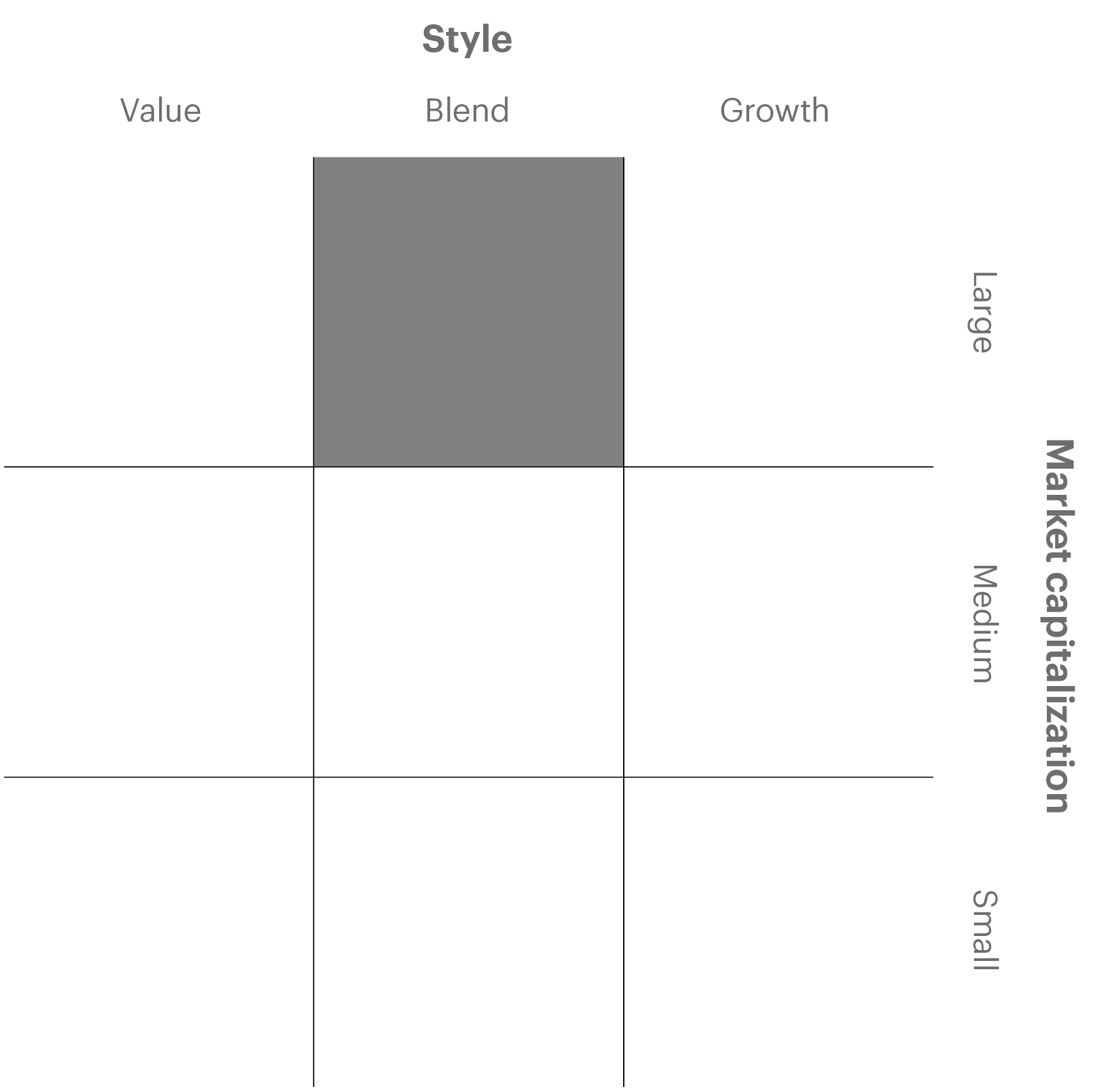
Equity style box

(as of 2/28/2026) Overview chart

Placement within the Morningstar Fixed Income Style Box is based on two variables: relative median market capitalization and relative price valuations (price/book and price/earnings) of the fund’s portfolio holdings. These numbers are drawn from the fund’s portfolio holdings figures most recently entered into Morningstar’s database and the corresponding market conditions. The Ownership Zone is represented by a shaded area surrounding the centroid. This zone encompasses 75% of a portfolio’s holdings on an asset-weighted basis and is designed to be a visual measure of how wide-ranging the portfolio is.

Holdings

Top 10 holdings

(as of 3/31/2026)
Security
Fund
Taiwan Semiconductor Manufacturing Co., Ltd.
12.13%
Samsung Electronics Co., Ltd.
6.22%
Tencent Holdings Ltd
4.46%
Alibaba Group Holding Limited
2.86%
SK hynix Inc.
2.27%
China Construction Bank Corporation Class H
2.08%
MediaTek Inc
1.97%
ASE Technology Holding Co., Ltd.
1.90%
Petroleo Brasileiro SA ADR Pfd
1.63%
Hyundai Motor Company
1.39%
Top 10 represents 36.91% of market value
Sector allocation

Sector allocation

(as of 2/28/2026)
Type
Fund
Benchmark
Cash & equivalents
0.00% -
Communication services
8.96% 7.58%
Consumer discretionary
11.10% 10.37%
Consumer staples
1.76% 3.36%
Energy
1.47% 3.68%
Financials
21.01% 20.73%
Health care
2.69% 2.88%
Industrials
6.96% 7.27%
Information technology
34.50% 33.22%
Materials
5.48% 7.45%
Real estate
4.39% 1.27%
Utilities
1.68% 2.19%

Sector diversification is a breakdown of the fund's investments based on the S&P Global Industry Classification Standard (GICS), a breakdown of market sectors used by Standard & Poor's. Sector weights are subject to change and may have changed since the date specified. Percent total may not add to 100% due to rounding.

Geographic allocation

Geographic allocation

(as of 2/28/2026)
Type
Fund
Benchmark
China
21.76% 23.77%
Taiwan
21.46% 22.50%
South Korea
17.63% 18.08%
India
11.96% 12.83%
Brazil
5.54% 4.56%
South Africa
4.49% 3.94%
Saudi Arabia
2.41% 2.59%
Peru
2.23% 0.43%
Mexico
2.02% 1.98%
United Arab Emirates
1.35% 1.39%

Geographic allocation is subject to change and may have changed since the date specified. Percent total may not add to 100% due to rounding.

Documents

Literature Details Frequency
Fact Sheet A, Institutional, R6 Quarterly Download
Regulatory Document Details Date
Annual Long Form Financial Statements R6, Institutional, A 10/31/2025 Download
Annual Report R6 10/31/2025 Download
Full Prospectus R6, Institutional, A 3/1/2026 Download
Quarterly Holdings A, Institutional, R6 1/31/2026 Download
Quarterly Holdings A, Institutional, R6 7/31/2025 Download
Semi-annual Long Form Financial Statements R6, Institutional, A 4/30/2025 Download
Semi-annual Report R6 4/30/2025 Download
Statement of Additional Information A, Institutional, R6 3/1/2026 Download
Summary Prospectus R6, Institutional, A 3/1/2026 Download
Our team

Meet the investment team

A diverse investment team composed of local experts combines its fundamental approach with macroeconomic analysis resulting in a superior framework for alpha generation.

Key risks

Investing involves risk, including the possible loss of principal. Stock values fluctuate in response to the activities of individual companies and general market and economic conditions. Foreign investments are especially volatile and can rise or fall dramatically due to differences in the political and economic conditions of the host country. These risks are generally intensified in emerging markets. Consult the fund’s prospectus for additional information on these and other risks.

Contact us

We look forward to helping you with your investment needs


The Morningstar Rating™ for funds, or star rating, is calculated for managed products (including mutual funds, variable annuity and variable life subaccounts, exchange-traded funds, closed-end funds, and separate accounts) with at least a three-year history. Exchange-traded funds and open-ended mutual funds are considered a single population for comparative purposes. It is calculated based on a Morningstar risk-adjusted return measure that accounts for variation in a managed product’s monthly excess performance, placing more emphasis on downward variations and rewarding consistent performance. The Morningstar Rating does not include any adjustment for sales loads. The top 10% of products in each product category receive 5 stars, the next 22.5% receive 4 stars, the next 35% receive 3 stars, the next 22.5% receive 2 stars, and the bottom 10% receive 1 star. The Overall Morningstar Rating for a managed product is derived from a weighted average of the performance figures associated with its 3-, 5-, and 10-year (if applicable) Morningstar Rating metrics. The weights are: 100% 3-year rating for 36–59 months of total returns, 60% 5-year rating/40% 3-year rating for 60–119 months of total returns, and 50% 10-year rating/30% 5-year rating/20% 3-year rating for 120 or more months of total returns. While the 10-year overall star rating formula seems to give the most weight to the 10-year period, the most recent 3-year period actually has the greatest impact because it is included in all three rating periods. Past performance is no guarantee of future results.

Some of Morningstar’s proprietary calculations, including the Morningstar Rating™, are not customarily calculated based on adjusted historical returns. However, for new share classes/channels, Morningstar may calculate an extended-performance Morningstar Rating. The extended performance is calculated by adjusting the historical total returns of the oldest share class of a fund to reflect the fee structure of the younger share class/channel, attaching this data to the younger share class’s performance record, and then compounding the adjusted plus actual monthly returns into the extended-performance Morningstar risk-adjusted return for the 3-, 5-, and 10-year time periods. The Morningstar risk-adjusted returns are used to determine the extended-performance Morningstar Rating. The extended-performance Morningstar Rating for this fund does not affect the retail fund data published by Morningstar, as the bell curve distribution on which the ratings are based includes only funds with actual returns. The Overall Morningstar Rating for multi-share funds is based on actual performance only or extended performance only. Once the share class turns three years old, the Overall Morningstar Rating will be based on actual ratings only. The Overall Morningstar Rating for multi-share variable annuities is based on a weighted average of any ratings that are available.

While the inclusion of pre-inception data in the form of extended performance can provide valuable insight into the probable long-term behavior of newer share classes of a fund, investors should be aware that an adjusted historical return can provide only an approximation of that behavior. For example, the fee structures of a retail share class will vary from that of an institutional share class, as retail shares tend to have higher operating expenses and sales charges. These adjusted historical returns are not actual returns. The underlying investments in the share classes used to calculate the pre-performance string likely will vary from the underlying investments held in the fund after inception. Calculation methodologies used by Morningstar may differ from those applied by other entities, including the fund itself.

The manager has contractually committed to certain fee waivers and/or expense reimbursements. Without these reductions, the fund’s returns would have been lower and rankings may have been lower. These reductions may be discontinued.

© 2025 Morningstar. All rights reserved. The information contained herein is proprietary to Morningstar and/or its content providers; may not be copied or distributed; and is not warranted to be accurate, complete, or timely. Neither Morningstar nor its content providers are responsible for any damages or losses arising from any use of this information.


Performance for the fund or the class shown may reflect a predecessor fund's or class' performance and may be adjusted to reflect the fund's or class' expenses as applicable.