
Global Equity Fund
Core global equity portfolio targeting consistent alpha
Designed as a core global equity allocation, the fund aims to generate consistent excess returns versus the MSCI All Country World Index (ACWI) through a systematic, active investment approach combining quantitative and fundamental analysis.
Key differentiators
- Focused on delivering consistent alpha through a disciplined systematic approach, driven by bottom up stock selection with fundamental validation
- A risk-controlled investment process with integrated macroeconomic, thematic and fundamental risk management seeking to mitigate exogenous risks for a smoother return profile
- A truly diversified core equity portfolio, typically holding 80–100 stocks and targeting a beta of 1 to the MSCI ACWI1, designed to complement passive or style‑focused exposures
¹A target is indicative only, is not guaranteed and does not take into account fees or charges that will reduce returns.
General facts
ISIN
LU3297091160
SEDOL
BQXMM19
Bloomberg
ALGESUA LX
Minimum investment
$50,000,000
Share class launch date
3/27/2026
Annual management fee
0.25%
Ongoing charges / Total expense ratio (TER)
0.35%
Benchmark name
MSCI ACWI Index (Net)
Settlement
T+2
Performance
Past performance is not indicative of future results.
Prices
Historical data
| YTD high | $114.45 | 5/11/2026 |
| YTD low | $99.41 | 3/30/2026 |
| 52-week high | $114.45 | 5/11/2026 |
| 52-week low | $99.41 | 3/30/2026 |
| 2025 high | - | |
| 2025 low | - |
Composition
Portfolio statistics
(as of 4/30/2026)| Fund | Benchmark | |
|---|---|---|
| Number of Holdings | - | 2514 |
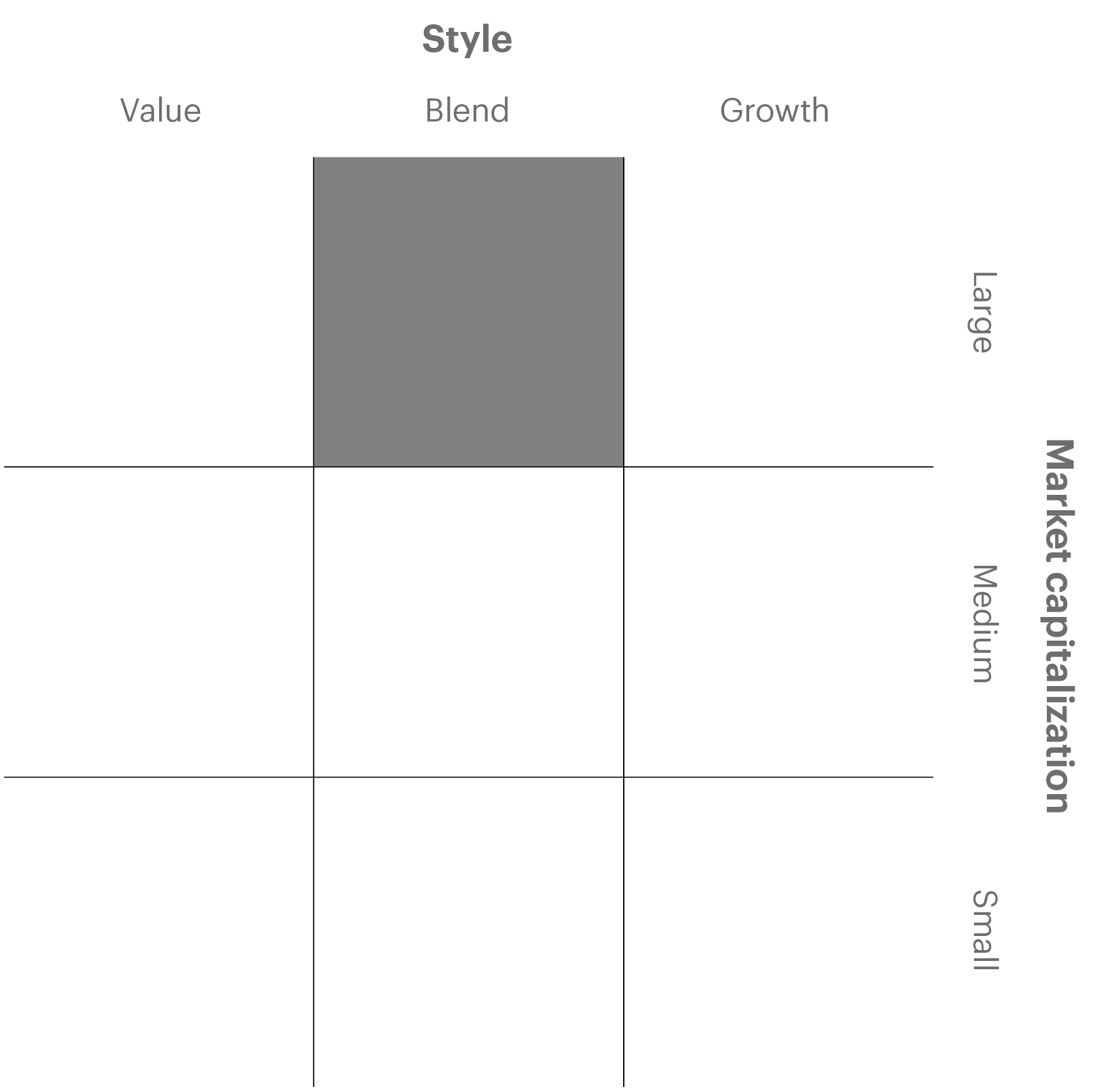
Equity style box
(as of 4/30/2026)
Placement within the Morningstar Fixed Income Style Box is based on two variables: relative median market capitalization and relative price valuations (price/book and price/earnings) of the fund’s portfolio holdings. These numbers are drawn from the fund’s portfolio holdings figures most recently entered into Morningstar’s database and the corresponding market conditions. The Ownership Zone is represented by a shaded area surrounding the centroid. This zone encompasses 75% of a portfolio’s holdings on an asset-weighted basis and is designed to be a visual measure of how wide-ranging the portfolio is.
Holdings
Top 10 holdings
(as of 4/30/2026)|
Security
|
Fund
|
|---|---|
|
NVIDIA Corporation
|
5.51%
|
|
Alphabet Inc. Class A
|
4.35%
|
|
Apple Inc.
|
3.78%
|
|
Microsoft Corporation
|
2.99%
|
|
Amazon.com, Inc.
|
2.51%
|
|
Taiwan Semiconductor Manufacturing Co., Ltd. Sponsored ADR
|
2.49%
|
|
Samsung Electronics Co., Ltd.
|
2.37%
|
|
Costco Wholesale Corporation
|
2.13%
|
|
Computacenter Plc
|
2.01%
|
|
Frontdoor, Inc.
|
1.97%
|
Based on ending weights as of month-end. Source: FactSet. The information shown is not intended to be, nor should it be construed to be, a recommendation to buy or sell an individual security.
Sector allocation
Sector allocation
(as of 4/30/2026)|
Type
|
Fund
|
Benchmark
|
|---|---|---|
|
Cash & equivalents
|
0.00% | - |
|
Communication services
|
8.72% | 8.82% |
|
Consumer discretionary
|
10.54% | 9.28% |
|
Consumer staples
|
4.47% | 5.06% |
|
Energy
|
2.89% | 4.18% |
|
Financials
|
17.29% | 16.42% |
|
Health care
|
7.36% | 8.05% |
|
Industrials
|
10.44% | 11.25% |
|
Information technology
|
28.93% | 28.69% |
|
Materials
|
3.63% | 3.81% |
|
Real estate
|
2.23% | 1.74% |
|
Utilities
|
3.50% | 2.68% |
Based on ending weights as of month-end. Source: FactSet. Percent total may not add to 100% due to rounding.
Geographic allocation
(as of 4/30/2026)|
Type
|
Fund
|
Benchmark
|
|---|---|---|
|
United States
|
62.74% | 63.32% |
|
France
|
6.92% | 2.19% |
|
Japan
|
6.67% | 5.01% |
|
United Kingdom
|
6.14% | 3.25% |
|
Taiwan
|
2.48% | 2.94% |
|
South Korea
|
2.34% | 2.21% |
|
Italy
|
2.33% | 0.73% |
|
China
|
2.23% | 2.73% |
|
Spain
|
1.73% | 0.84% |
|
Netherlands
|
1.71% | 1.16% |
Based on ending weights as of month-end. Source: FactSet. Percent total may not add to 100% due to rounding.
Currency allocation
Currency allocation
(as of 4/30/2026)|
Currency
|
Share Class
|
Benchmark
|
|---|---|---|
|
Brazilian Rial
|
0.73% | 0.48% |
|
British Pound Sterling
|
6.14% | 3.18% |
|
Canadian Dollar
|
0.44% | 3.08% |
|
Cash & equivalents
|
0.86% | - |
|
Euro (EUR)
|
12.87% | 7.60% |
|
Hong Kong Dollar
|
2.23% | 2.58% |
|
Japanese Yen
|
6.67% | 5.01% |
|
New Zealand Dollar
|
1.65% | 0.04% |
|
Singapore Dollar
|
0.84% | 0.31% |
|
South Korean Won
|
2.34% | 2.21% |
|
United States Dollar
|
65.22% | 63.96% |
Currency allocation is subject to change and may have changed since the date specified. Percent total may not add to 100% due to rounding.
Documents
| Regulatory Document | Date | Language | |
|---|---|---|---|
| KIID | 4/1/2026 | English | Download |
| PRIIPs KIDs | 3/23/2026 | Italian | Download |
| PRIIPs KIDs | 3/23/2026 | German | Download |
| PRIIPs KIDs | 3/23/2026 | English | Download |
| PRIIPs KIDs | 3/23/2026 | English | Download |
| PRIIPs KIDs | 3/23/2026 | Danish | Download |
| PRIIPs KIDs | 3/23/2026 | Dutch | Download |
| PRIIPs KIDs | 3/23/2026 | Finnish | Download |
| PRIIPs KIDs | 3/23/2026 | French | Download |
| PRIIPs KIDs | 3/23/2026 | German | Download |
| PRIIPs KIDs | 3/23/2026 | Italian | Download |
| PRIIPs KIDs | 3/23/2026 | Norwegian | Download |
| PRIIPs KIDs | 3/23/2026 | Portuguese | Download |
| PRIIPs KIDs | 3/23/2026 | Spanish | Download |
| PRIIPs KIDs | 3/23/2026 | Swedish | Download |
| PRIIPs KIDs | 3/23/2026 | French | Download |
Meet the investment team
The team believes company returns are predictable based on quantitative factors. They seek to systematically harvest these factors to generate alpha for their clients.
Smaller-company securities risk: securities of companies with smaller market capitalisations tend to be more volatile and less liquid than securities of larger companies.
Geographic concentration risk: investments concentrated in specific geographic regions and markets may be subject to greater volatility due to economic downturns and other factors affecting the specific geographic regions.
Global investment risk: securities of certain jurisdictions may experience more rapid and extreme changes in value and may be affected by uncertainties such as international political developments, currency fluctuations and other developments in the laws and regulations of countries in which an investment may be made.
ESG risk: applying an ESG screen for security selection may result in lost opportunity in a security or industry, resulting in possible underperformance relative to peers. ESG screens are dependent on third-party data, and errors in the data may result in the incorrect inclusion or exclusion of a security.
Currency risk: currency exchange rates may fluctuate significantly over short periods of time and can be affected unpredictably by intervention (or the failure to intervene) by relevant governments or central banks or by currency controls or political developments.
Emerging market risk: emerging markets may be more sensitive than more mature markets to a variety of economic factors and may be less liquid than markets in the developed world.
Equity securities risk: these securities fluctuate in value and price in response to factors impacting the issuer of the security as well as general market, economic and political conditions.
Leverage risk: the use of certain types of financial derivative instruments may create leverage which may increase share price volatility.
Investors should note that, relative to the expectations of the Autorité des Marchés Financiers, this fund presents disproportionate communication on the consideration of non-financial criteria in its investment policy.
The ongoing charges/total expense ratio (TER) reflects annual total operating expenses for the class, excludes transaction costs and is expressed as a percentage of net asset value. The figure shown is from current KID. The investment manager has committed to reimburse the Sub-Fund when the ongoing charges exceed the agreed upon TER. Ongoing charges may vary over time.
Any benchmark referenced is for comparative purposes only, unless specifically referenced otherwise in this material and/or in the prospectus, under the Sub-Funds’ Investment Objective and Policy.
†Promotes environmental and social characteristics but does not have a sustainable investment objective
†While the Sub-Funds listed above have access to both internal and external ESG research and integrate financially material sustainability risks into their investment decision-making processes, ESG-related factors are considered but not determinative, permitting the relevant Sub-Investment Managers to invest in issuers that do not embrace ESG; as such, sustainability risks may have a more material impact on the value of the Sub-Fund’s investments in the medium to long term. The investments underlying these Sub-Funds do not take into account the EU criteria for environmentally sustainable economic activities.
The Morningstar Rating™ for funds, or star rating, is calculated for managed products (including mutual funds, variable annuity and variable life subaccounts, exchange-traded funds, closed-end funds, and separate accounts) with at least a three-year history. Exchange-traded funds and open-ended mutual funds are considered a single population for comparative purposes. It is calculated based on a Morningstar risk-adjusted return measure that accounts for variation in a managed product's monthly excess performance, placing more emphasis on downward variations and rewarding consistent performance. The Morningstar Rating does not include any adjustment for sales loads. The top 10% of products in each product category receive 5 stars, the next 22.5% receive 4 stars, the next 35% receive 3 stars, the next 22.5% receive 2 stars, and the bottom 10% receive 1 star. The Overall Morningstar Rating for a managed product is derived from a weighted average of the performance figures associated with its 3-, 5-, and 10-year (if applicable) Morningstar Rating metrics. The weights are: 100% 3-year rating for 36–59 months of total returns, 60% 5-year rating/40% 3-year rating for 60–119 months of total returns, and 50% 10-year rating/30% 5-year rating/20% 3-year rating for 120 or more months of total returns. While the 10-year overall star rating formula seems to give the most weight to the 10-year period, the most recent 3-year period actually has the greatest impact because it is included in all three rating periods. Past performance is no guarantee of future results.
© 2024 Morningstar. All rights reserved. The information contained herein is proprietary to Morningstar and/or its content providers; may not be copied or distributed; and is not warranted to be accurate, complete, or timely. Neither Morningstar nor its content providers are responsible for any damages or losses arising from any use of this information. Past performance is no guarantee of future results.