
PM Spotlight: Finding Value Across U.S. Large-Cap Equities
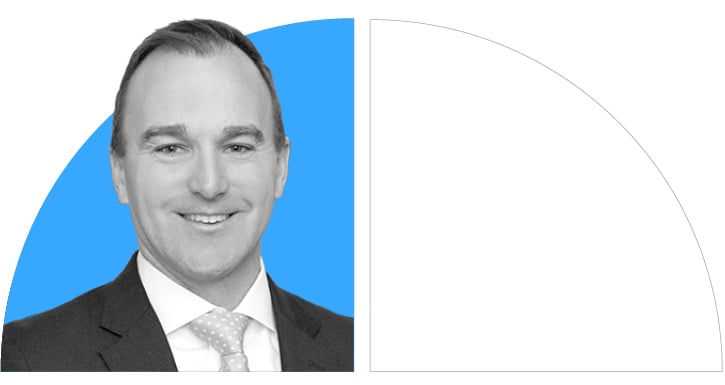
Neville Javeri is a portfolio manager and head of Allspring’s Empiric LT Equity team. The team incorporates their fundamental company views within a rigorous process, aiming for consistent long-term returns.

Key takeaways
- The Empiric LT Equity team values each stock over a market cycle—typically five years or more—applying a consistent, disciplined, and repeatable process.
- Allspring’s Total Return Monitor ties together valuation and growth for each stock the team analyzes and ranks the attractiveness of each one.
- Cyclicals and industries are among those large-cap sectors that have been underappreciated and may do well going forward, especially as rates come down further.
Q: How did you get started in the investment industry?
A: You might say I took the side door, starting out in public accounting as an auditor. That allowed me to see firsthand how companies operated and how they made decisions—whether that was being on the shop floor seeing their supply chain management and distribution or getting an in-depth look at management cultures and a feel for the morale of team members.
It was fascinating to figure out which teams had an edge or were performing better than others. I was looking to identify best practices and interested in studying companies in greater detail. I really wanted to be an investor, so I went to graduate school for an MBA and later became a CFA® charterholder. I started out as a hardware analyst covering some of the early companies in Silicon Valley and have covered a lot of different industries since then. Now I really enjoy portfolio management. No two days are the same, thanks to the market.
Q: Which strategies does your team manage?
A: The Empiric LT Equity team runs four U.S. large-cap active solutions, two of which are offered as active exchange-traded funds (ETFs). Specifically, the team manages a large-cap core strategy, a dividend strategy, a growth strategy, and an equity premium separately managed account (SMA). Large-cap core is offered as an ETF (ALRG), and large growth is also offered as an ETF (AGRW).
Our team has been together for over 20 years. Today we have over $16 billion in assets under management.1 A big part of our success is the flat collaborative structure that fosters quick decision-making. We’re also unique in that most teams in the industry managing multiple strategies go up and down the market-cap spectrum, whereas we look for all opportunities across style within the large-cap space. We run these complementary strategies by taking a long-term view—longer than most of the other managers in our space. We value each business by looking out over a market cycle—typically five years or more—and applying a consistent, disciplined, and repeatable process.
Q: How does it work in practice?
A: The Total Return Monitor is our framework for decision-making. It ties together valuation and growth rate for each security we analyze and then ranks the attractiveness of every holding in our portfolios, watch lists, and focus lists. This is the foundation for everything we do. It backs up our fundamental work and visits to management with deep-rooted financial statement analysis and modeling. That gives us a disciplined and repeatable process that helps us pursue consistent performance across strategies and across market environments.
We’re essentially answering two key questions in our investment analysis: What’s a fair earnings-per-share value for each company over the next five years, and how much of a premium or discount are we willing to accept to invest? Along with our fundamental work, the Total Return Monitor helps us identify great companies that may be temporarily mispriced relative to their true long-term potential. A great stock may not always turn out to be a great investment. It depends on how much you paid for it and when you bought it.
 We value each business by looking out over a market cycle—typically five years or more—and applying a consistent, disciplined, and repeatable process.
Q: Can you give an example of how it works?
A: UPS is a great example. In 2017, when the Tax Cuts and Jobs Act was passed, U.S. companies received a windfall with corporate tax cuts. Most companies used it to buy back shares and boost earnings—but not UPS. Company management invested in supply chains to make their distribution network more efficient. The investment was expected to pay off in three or four years, but the stock sold off when management announced its decision because, historically, UPS had some execution issues. We put our own estimates into the Total Return Monitor going out five years, and the stock looked incredibly attractive. The Street didn’t even have estimates going out five years and missed a great opportunity. Our process identified the mispricing, and we were able to buy the stock and add alpha.
Q: What are you hearing today from investors? What are their top concerns for large-cap equities in the current market?
A: I would say three things—valuation, concentration, and interest rates. The S&P 500 is coming off three years of exceptional returns, and valuations may be stretched. The index has been significantly above its 10-year average of 18.5x forward four-quarters earnings. Earnings would have to keep growing to sustain current valuations.
There’s also been a concentration within indexes. A handful of large companies have dominated returns and made it harder for active managers to overweight these positions without taking on exponential risk.
Then there are interest rates. If inflation remains sticky or reinflationary forces enter the market causing the Federal Reserve to reduce rates more gradually, a higher-for-longer rate environment would be a negative for both equities and fixed income. If some of these factors lead to a scenario other than a soft landing, companies and consumers could be significantly worse off.
Q: What are you looking forward to? Are there market segments or return drivers you think will be particularly favorable over the near or mid-term?
A: Some market sectors have been unloved by investors simply because the focus has been on mega-cap tech names. Growth has outperformed value for the past five years in large part because of these companies—particularly those that may have an advantage in artificial intelligence (AI). That may be the case longer term, but over the near or mid-term, we believe those growth rates will slow and investors will seek opportunities in underappreciated sectors.
Cyclicals and industrials are two that should fare particularly well, as long as rates continue to come down. Railroads, transportation companies, and other industrial cyclical companies that have historically traded at or near market multiples are trading at discounts and offer incredible opportunities relative to their future prospects. Banks should also benefit from more neutral capital requirements and friendlier regulation. The growing need for energy to power the AI boom should bode well for utilities. And if the Magnificent Seven and Big Tech stocks mean revert, value should close the gap with growth.
We see the advantage in staying with large caps, even in a broadening market scenario. These companies tend to have dominant market positions and balance sheets that can generate substantial free cash flow. Generally speaking, they have lower debt ratios and greater ability to control their own destiny compared with small- and mid-cap companies.
For our team, I should add that we’re incredibly excited about last year’s launch of our large-cap growth actively managed ETF. We offer exposure with the same process, the same team, and the same discipline as the strategy we’ve managed for years but with the trading, liquidity, and tax benefits of an ETF.
1. Source: Allspring, as of 31-Jan-26.
CFA® and Chartered Financial Analyst® are trademarks owned by CFA Institute.
ALL-02102026-q7kf702s
The “Magnificent 7” comprises the 7 largest stocks in the S&P 500: Microsoft, Alphabet, Inc., Apple, Inc., Meta Platforms Corp., Amazon, NVIDIA Corp., and Tesla, Inc.
Equity strategies:
Market risk: Security markets are volatile and may decline significantly in response to adverse issuer, regulatory, political, or economic developments with different sectors of the market and different security types reacting differently to such developments.
Equity securities risk: Equity securities fluctuate in value and price in response to factors specific to the issuer of the security, such as management performance, financial condition, and market demand for the issuer's products or services, as well as factors unrelated to the fundamental condition of the issuer, including general market, economic, and political conditions.
Small-cap securities risk: If a strategy invests in the securities of smaller-capitalization companies, these securities tend to be more volatile and less liquid than those of larger companies.
Foreign securities risk: If a strategy invests in the securities of non-U.S. issuers, these investments may be subject to lower liquidity, greater price volatility, and risks related to adverse political, regulatory, market, or economic developments and may be affected by changes in foreign currency exchange rates.
Investors should know that this strategy deployed may be subject to additional investment risks. For important information about the investment manager, please refer to the investment manager’s Form ADV Part 2, which is available upon request.
Managed accounts:
All investing involves risks, including the possible loss of principal. Stock values fluctuate in response to the activities of individual companies and general market and economic conditions. The use of derivatives, such as futures, options, and swap agreements, can lead to losses, including those magnified by leverage, particularly when derivatives are used to enhance return rather than mitigate risk. Certain derivative instruments may be difficult to sell when the portfolio manager believes it would be appropriate to do so or when the other party to a derivative contract may be unwilling or unable to fulfill its contractual obligations.
The use of derivatives may reduce returns and/or increase volatility. A Fund that purchases options, which are a type of derivative, is subject to the risk of a loss of premiums without offsetting gains. The use of leverage results in certain risks, including, among others, the likelihood of greater volatility of net asset value.
Allspring Managed Account Services is a unit within Allspring Global Investments that is responsible for the management and administration of the Allspring Funds Management, LLC, retail separately managed account (SMA) portfolios. Allspring Funds Management acts as a discretionary manager for SMAs and as a non-discretionarymodel provider in a variety of managed account or wrap-fee programs (MA programs) sponsored by third-party investment advisers, broker-dealers, or other financial services firms (collectively, sponsors). When acting as a non-discretionary model provider, Allspring Funds Management’s responsibility is limited to providing non-discretionary investment recommendations (in the form of model portfolios) to the sponsor. The sponsor may use these recommendations in connection with its management of MA program accounts. In these model-based programs, the sponsor serves as the investment manager and maintains trade implementation responsibility.
The investment strategies described herein are those of Allspring Managed Account Services. These materials are being provided for illustrative and informational purposes only. No assurances can be given that any strategy or objective will be achieved. Separately managed account strategies may not be suitable or appropriate for all investors. The information contained herein is obtained from multiple sources that are believed to be reliable. However, such information has not been verified and may be different from the information included in documents and materials created by the sponsor firm in whose investment program a client participates. Some sponsor firms may require that these Allspring Managed Account Services materials be preceded or accompanied by investment profiles or other documents or materials prepared by such sponsor firms, which will be provided upon a client’s request. For additional information, documents, and/or materials, please speak to your financial advisor.
ETFs:
It is possible that an active trading market for ETF shares will not develop, which may hurt your ability to buy or sell shares, particularly in times of market stress. Shares may trade at a premium or discount to their net asset value (NAV) in the secondary market. These variations may be greater when markets are volatile or subject to unusual conditions. There can be no assurance that active trading markets for the shares will develop or be maintained by market makers or authorized participants. Shares of the ETFs are not redeemable with the ETF other than in creation unit aggregations. Instead, investors must buy or sell the ETF shares in the secondary market at market price (not NAV) through a broker-dealer. In doing so, the investor may incur brokerage commissions and may pay more than NAV when buying and may receive less than NAV when selling. Investing involves risk, including the possible loss of principal. Stock values fluctuate in response to the activities of individual companies and general market and economic conditions. Consult the fund’s prospectus for additional information on these and other risks
Allspring ETFs are not available for distribution outside of the United States.
Carefully consider a fund’s investment objectives, risks, charges, and expenses before investing. For a current prospectus and, if available, a summary prospectus, containing this and other information, visit allspringglobal.com. Read it carefully before investing.
This material is for general informational and educational purposes only and is NOT intended to provide investment advice or a recommendation of any kind—including a recommendation for any specific investment, strategy, or plan.
Related insights

According to Derrick Irwin, senior portfolio manager and co-head of Allspring’s Intrinsic Emerging Markets Equity team, there’s potential for a sea of change in how investors allocate to emerging market equities.

Manju Boraiah—senior portfolio manager, head of Systematic Fixed Income and co-head of Custom SMA—has carved a unique path for his career—guided by his two passions, art and math.

Wai Lee’s approach to solving investment challenges is embedded in his three principles of research. It all started with engineering school and a Mercedes-Benz V-6 engine.

Insight
PM Spotlight: Wired for GrowthMike Smith is a senior portfolio manager and head of Allspring’s Growth Equity team. His team’s diversified approach focuses on stocks with robust, sustainable, and underappreciated growth across the market-cap spectrum.
Bryant VanCronkhite is a senior portfolio manager and co-head of Allspring’s Special Global Equity team. The team looks for market inefficiencies using a CPA’s knowledge and approach to analyzing financial statements.