
PM Spotlight: For the Love of the Journey
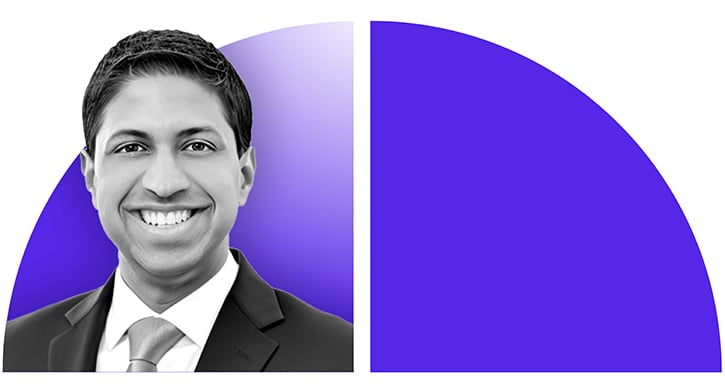
Manju Boraiah explains how a career spanning computational graphics, emerging markets, and systematic investing shaped Remi, and why human judgment still matters in building personalized portfolios.
Key takeaways
- Creativity and logic work together: Manju Boraiah’s path from computational graphics research to systematic investing shaped a belief that art and math are two sides of the same coin.
- Models need human oversight: His “predict-decide-learn” approach pairs systematic tools with portfolio manager judgment, because no model is perfect and every model has blind spots.
- Personalization spans asset classes: Remi supports customized equity and fixed income separately managed accounts, with direct indexing, tax management, and tailored exposures in a single framework.
This issue of PM Spotlight profiles Manju Boraiah, senior portfolio manager and head of Custom SMA Portfolio Management. Manju’s philosophy of life—to love the journey—has served him well, from working in the research labs of Stanford University to building and driving the strategic vision for a transformative platform that now delivers customized equity and fixed income separately managed accounts (SMAs) at scale.
Q: You have such a unique background. What fostered your diverse interests?
A: I was born in Bangalore, India, which is known as the Garden City because of all the parks and greenspace. It’s also very multicultural and multi-linguistic. And because of that, I grew up learning five languages, which had a profound influence on me as an individual. It really helped me appreciate and value our differences as human beings.
Linguistic research shows us that being exposed to different cultures and different languages builds neuroplasticity. Perhaps that’s connected to why, even growing up, art and math were my two passions. Creativity and logic are two sides of the same coin. I see the beauty in drawings, sketches, and paintings, and also in mathematical solutions.
All of this, combined with the values instilled by my family, defined my direction in life. I learned from my parents, and I’ve always believed, that no human being is limited in their life and that, if you open up your heart and soul and pursue your passion, anything is feasible. That’s helped me view every day as an opportunity to learn something new and to connect with someone new.
 An important lesson I took from my startup days is that it doesn’t matter how innovative the technology developed to solve a problem is if it doesn’t enhance the client experience.
Q: Did you study math or art in college?
A: I actually started out studying computer science engineering with a focus on computer graphics. Then for graduate studies at Stanford University, I decided to focus on computational graphics, which is a field of graphics where you model real-life motion, like flowing water or facial expressions. It’s essentially using mathematics to make dynamic motion look real.
While at Stanford, I also pursued opportunities in two research labs. One was the Project-Based Learning Lab, where I worked on a patented mobile technology called “Talking Paper,” which involved translating voice and written content on paper into digital video. The other lab I worked at was the Stanford-NASA Biocomputation Center where I ended up working on a cool technology involving a CT scanner that could be used on the International Space Station. Both experiences helped me understand that I really enjoy using mathematics to solve problems, which led me to an interesting class in finance. And that’s when I realized that I could use math to build innovative solutions to complex investment problems.
One other passion that I picked up while I was at Stanford is running. My love for running hasn’t waned and I still run daily, religiously. Running has taught me to appreciate the journey more than the destination, which is a great lesson in life. If you love the process, then the goals will happen. The destination becomes a byproduct when you focus on the journey.
Q: Your natural curiosity and love of problem-solving led you to a fairly complex area of investing: systematic emerging markets fixed income.
A: This was, again, a great opportunity. I was at Barclays Global Investors (now BlackRock) helping construct and manage sovereign bonds across countries with different economic regimes, monetary policy environments, growth cycles, and inflation regimes. When we started to build these hedge fund strategies to invest in emerging market rates, foreign exchange, and credit, the advice we got from colleagues was to just take what works in developed markets and apply it to emerging markets. But what seems to work in developed markets, where things are more stable and more predictable, often doesn’t translate to emerging markets because of the idiosyncratic risk and the nature of these different countries. Take Chile, for example. Around 70% of the economy is driven by one commodity—copper. South Africa, on the other hand, is also dependent on commodities, but it’s more economically diverse. There is quite a lot of economic diversity across these countries that have very different characteristics.
That’s also the case when you look at inflation and growth. Some central banks in these countries are fighting inflation; others are focused on maintaining currency value. Some have free-floating currencies; others have tightly managed currencies. When you put it all together, you need a model to work across all these variables consistently.
But no model is perfect. Models can have blind spots and they can run their course. I truly believe that a hands-on-the-wheel approach is best. It helps you identify and understand an investment model’s pitfalls so you can enhance it. It should be an iterative process. I think of this process as “predict-decide-learn.” We start with a predictive engine, using systematic tools or systematic insights or translating fundamental insights into systematic insights. We use that predictive engine to decide how to invest in these diverse markets. And we learn from the whole process to continually enhance the model based on what’s working and what’s not working.
Q: Is that similar to the approach to conceptualize and build Remi, Allspring’s customized investment platform for SMAs?
A: We had the underlying capabilities and optimization engine for building and evolving institutional fixed income portfolios, which helped us build customizable, tax-optimized SMAs for individual investors at scale. Remi uniquely combines our systematic and fundamental multi-asset capabilities on a scalable technology platform, spanning both equity and fixed income strategies. That breadth matters because investors rarely have a single need. Someone may want a tax-managed equity allocation alongside a custom bond ladder, and Remi is built to support both within one framework. We started with fixed income: our first SMA strategy on Remi combined our systematic capabilities with fundamental capabilities for municipal bonds, or munis.
Munis are a very quirky but interesting asset class. To start with, there are a million muni issues outstanding, but the broadest benchmark has only around 60,000 bonds. Going from thousands of bonds to efficiently selecting just 20 or 30 calls for systematic rules. And it’s not just how to select the individual bonds but how to do credit and issuer selection. That’s where fundamental research comes into play to help manage the left tail risk. We can translate our fundamental research team’s recommendations into portfolio decisions.
Q: How does direct indexing fit into the picture when you’re customizing exposure?
A: By the same token, Remi expands access to direct indexing for a broader range of investors. While direct indexing is not new, it was historically used only by institutional or high-net-worth investors due to higher investment minimums. Today, we use direct indexing to customize client exposure—whether the goal is to capture tax alpha opportunities, reduce concentrated positions, or efficiently tilt toward a specific sector or values preference.
Our underlying technology and optimization capabilities enable us to personalize and transition portfolios in a tax-efficient way. Equities offer a good example here. A client wanted to diversify their emerging markets allocation, but there was no off-the-shelf solution that fit their desired risk/return profile. We collaborated with a major index provider to design a custom emerging markets index of American Depositary Receipts, holding roughly 120 to 150 securities. This gave the client efficient, diversified exposure while retaining the ability to harvest losses. It’s a perfect example of how we let clients’ needs drive innovation by keeping the client experience at the center of everything we do.
I truly believe that a hands-on-the-wheel approach is best. It helps you identify and understand an investment model’s pitfalls so you can enhance it.
Q: How much does day-to-date management matter in a direct indexing portfolio?
A: More than most people expect. Two portfolios can track the same index and look identical on paper, but the way they're managed day to day can produce very different outcomes.
Tax-loss harvesting is the clearest example. A simple rules-based approach might harvest whenever a loss crosses a set threshold. That captures the loss, but over time it can quietly pull the portfolio away from its index. We look at both together. Our optimization process weighs the tax opportunity against the impact on tracking error at the same time, within guardrails our portfolio managers set for each account: how much tracking error the client is comfortable with, how much in gains the client is willing to realize, and any restrictions the client requested. Our portfolio managers oversee that process on an ongoing basis.
That's "predict-decide-learn" applied to individual portfolios. The technology surfaces the opportunity, human judgment shapes how and when we act on it, and we learn from the results to keep refining how we manage each account. Personalization isn't a one-time setup. It's an ongoing process of managing an account toward what that particular investor needs.
Q: Does the focus on client experience ever conflict with love of the process?
A: They can and should go together. It’s like art and math—they can be two sides of the same coin. An important lesson I took from my startup days is that it doesn’t matter how innovative the technology developed to solve a problem is if it doesn’t enhance the client experience. We all know that innovation is difficult, but the only way to innovate successfully and to improve the client experience is by focusing on the process and accepting the fact that sometimes you must fail gracefully in order to succeed. The key is to really learn from your experiences and apply these lessons to future endeavors. Those are the moments that allow you to look at a problem in a new way and to appreciate every step of the journey.
Common questions about direct indexing and personalized portfolios
- What is direct indexing?
Direct indexing is a strategy that seeks to track an index by owning its individual securities directly in a separately managed account (SMA), rather than through a fund. Because you own the underlying securities, the portfolio can be personalized and taxes can be managed throughout the year.
- What is tax-loss harvesting?
Tax-loss harvesting means selling an investment that has dropped in value so the realized loss can help offset taxes owed on other investment gains, while seeking to keep the portfolio’s overall risk profile intact. Owning individual securities creates more opportunities to harvest losses than a pooled fund does.
- What is tracking error, and why does it matter?
Tracking error measures how closely a portfolio’s returns follow its target index. Lower tracking error means the portfolio stays more in line with the index; higher tracking error means it may drift and behave differently than expected. Managing it is central to a well-run direct indexing portfolio.
- Why does human judgment matter in systematic investing?
Models can identify opportunities, but they also have blind spots and can run their course. Allspring uses a “predict-decide-learn” approach, where systematic tools generate insights, portfolio managers decide how to act on them, and the process is continually refined based on what is and isn’t working.
- What is Remi?
Remi is Allspring’s platform for personalizing separately managed account portfolios, combining technology, research, and human insights. It expands access to customized portfolios and direct indexing for a broader range of investors than the institutional and high-net-worth clients who historically used them.
- Can a customized portfolio include both equity and fixed income?
Yes. Remi combines systematic and fundamental capabilities across both asset classes on a single platform, so an investor may hold a tax-managed equity allocation alongside a custom bond ladder within one framework.
Related insights

Rushabh Amin, senior portfolio manager, and Matthias Scheiber, senior portfolio manager and head of Allspring’s Multi-Asset investing team, collaborate on the research, design, and management of outcome-oriented multi-asset investment solutions.

Maulik Bhansali, CFA, is a senior portfolio manager and co-head of the Core Fixed Income team. As a former actuary, he knows the role volatility can play in sourcing opportunities. That’s not just theory; it’s backed up by a solid track record.

Nick Venditti, CFA, senior portfolio manager for the Municipal Fixed Income team, is not your average muni guy. Despite all the market noise, he’s a staunch believer in the power of municipal bonds to continue to add value to a diversified portfolio.

Alison Shimada, senior portfolio manager and head of the Total Emerging Markets Equity team, has a diverse international background that adds deep perspective to managing portfolios in the growing asset class of emerging market (EM) equities.

Elaine Tse is a senior portfolio manager on Allspring’s Total Emerging Markets Equity team. She brings deep understanding and lived experience to building and managing resilient emerging market (EM) portfolios.
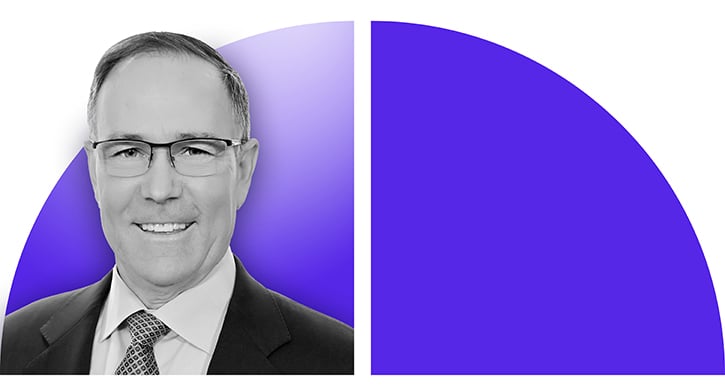
Michael Bradshaw, senior portfolio manager and head of Precious Metals for Allspring, has deep experience in precious metals—starting in the gold mines of northern Ontario. That adds a real advantage, especially as complexity or risk rises.

Andy Hunt, senior investment strategist and head of Pension Strategy for Allspring’s Global Client Strategy team, brings decades of experience in tailoring fixed income exposure to help Allspring clients meet their goals.

According to Derrick Irwin, senior portfolio manager and co-head of Allspring’s Intrinsic Emerging Markets Equity team, there’s potential for a sea of change in how investors allocate to emerging market equities.

Wai Lee’s approach to solving investment challenges is embedded in his three principles of research. It all started with engineering school and a Mercedes-Benz V-6 engine.

Insight
PM Spotlight: Wired for GrowthMike Smith is a senior portfolio manager and head of Allspring’s Growth Equity team. His team’s diversified approach focuses on stocks with robust, sustainable, and underappreciated growth across the market-cap spectrum.
All investing involves risks, including the possible loss of principal. Stock values fluctuate in response to the activities of individual companies and general market and economic conditions Bond values fluctuate in response to the financial condition of individual issuers, general market and economic conditions, and changes in interest rates. Changes in market conditions and government policies may lead to periods of heightened volatility in the bond market and reduced liquidity for certain bonds held in the portfolio. In general, when interest rates rise, bond values fall and investors may lose principal value. Interest rate changes and their impact on the portfolio can be sudden and unpredictable. A portion of the strategy’s income may be subject to federal, state, and/or local income taxes or the alternative minimum tax. Any capital gains distributions may be taxable. Bond laddering does not ensure a profit or protect against loss in a declining market. Foreign investments may be subject to lower liquidity; greater price volatility; and risks related to adverse political, regulatory, market, or economic developments and may be affected by changes in foreign currency exchange rates. The use of derivatives may reduce returns and/or increase volatility. Style factor exposure, including but not limited to beta, growth, value, liquidity, etc., can perform differently and shift in and out of favor through a market cycle.
Investors should know that this strategy deployed may be subject to additional investment risks. For important information about the investment manager, please refer to the investment manager’s Form ADV Part 2, which is available upon request.
Allspring Managed Account Services (the firm) is a unit within Allspring Global Investments and is responsible for the management and administration of the Allspring Funds Management, LLC, retail separately managed account portfolios (wrap portfolios). Allspring Funds Management acts as a discretionary manager for separately managed accounts (“SMA”) and as a non-discretionary model provider in a variety of managed account or wrap fee programs (“MA Programs”) sponsored by third-party investment advisers, broker-dealers, or other financial services firms (a “Sponsor”). When acting as non-discretionary model provider, Allspring Funds Management’s responsibility is limited to providing non-discretionary investment recommendations (in the form of model portfolios) to the Sponsor. The Sponsor may use these recommendations in connection with its management of MA Program accounts. In these “model-based” programs, the Sponsor serves as the investment manager and maintains trade implementation responsibility.
Tax alpha refers to the additional value or returns generated in an investment portfolio by incorporating strategies that minimize tax liabilities, such as tax-loss harvesting. Tax alpha is based on historical performance and does not represent future results.
Tax-loss harvesting is selling an investment that has dropped in value so the realized loss can help offset taxes owed on other investment gains, while seeking to keep the portfolio’s overall risk profile intact.
Tracking error is a measure of how closely a portfolio’s returns follow its target index. Lower tracking error means the portfolio stays more in line with the index; higher tracking error means it may drift away from it and behave differently than expected.
All investing involves risks, including the possible loss of principal. There can be no assurance that any investment strategy will be successful. Investments fluctuate with changes in market and economic conditions and in different environments due to numerous factors, some of which may be unpredictable. Each asset class has its own risk and return characteristics.
This material is for general informational and educational purposes only and is NOT intended to provide investment advice or a recommendation of any kind—including a recommendation for any specific investment, strategy, or plan.
ALL-09172026-sokqm6if