
Exploring Risk From Every Angle: Systematic Core Equity
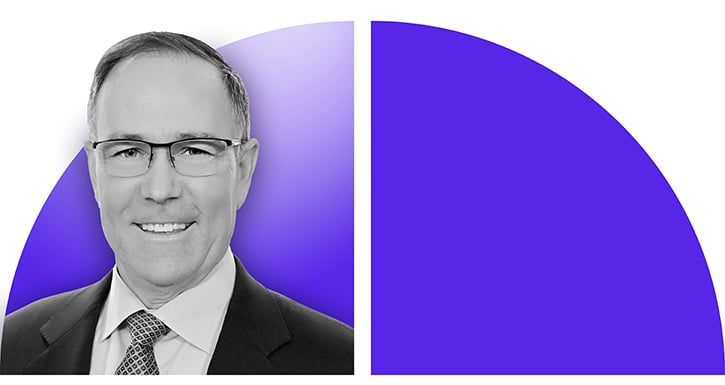
Listen to John Campbell from our Systematic Core Equity team discuss how multiple perspectives reveal the full picture of risk.
Transcript
John Campbell: Today's markets are complex, and risk can emerge from many angles. This is why we believe relying on just one perspective isn't enough. For us, evaluating risk means building a complete picture. Without research, it's nearly impossible to understand the risks involved in investing. That's why the Systematic Core team blends our advanced quantitative tools with deep, fundamental analysis to gauge the true picture of investment risk. Starting with the bottom left quadrant, when we apply quantitative risk models from the bottom up, we get a clear view of fundamental risks. These risks are typically referred to as common factor or style risks. We use a research-based model to keep our strategies on track. This helps us control how much our results might differ from the market and avoid risks that don't fit with our investment approach. Why? Because if we take on risks that don't align with our strategy, it can water down performance, create surprises, and make it harder to deliver consistent results. Moving to the top left quadrant, we want to be mindful of macroeconomic forces. Think of this as big-picture stuff that can shake up the market. These are forces we can't control but we need to watch closely—things like interest rates, changes in commodity prices, and global trends in yields. Keeping an eye on these helps us understand how broad economic shifts might impact our investments so we can make smarter decisions in a constantly changing world. Quantitative risk models have been foundational to our team's process since the 1990s, providing what we believe is repeatability and consistency. But we also think that relying on these models alone would leave out half the picture. Numbers don't tell the whole story. Some risks are harder to measure or only matter for a short period of time—things like geopolitical tensions, new technologies shaking up an industry, or sudden policy changes. These emerging risks don't always show up in traditional models, but they can have a big impact on markets. That's why we look beyond the data to identify these trends early and adjust when needed. Qualitative analysis applied from the top down helps us stay ahead of the curve, not just react to it. Finally, we dig deeper at the company level to find idiosyncratic risks—unique challenges like lawsuits, regulatory roadblocks, or negative sentiment. Our portfolio managers go beyond traditional models by tapping into diverse sources—news trends, corporate actions, and even unusual price moves. This bottom-up approach gives us a clearer view of company-specific risks and helps us avoid costly surprises. And now, we see the full picture—a multidimensional approach to risk that allows us to navigate complex markets with greater clarity, precision, and confidence. Our risk management approach guides us in seeking companies we believe offer attractive valuations and strong fundamentals. Through this disciplined process, we strive to build portfolios designed to navigate changing market conditions and align with client objectives.
Key takeaways
- Quantitative precision: Advanced risk models provide consistency and clarity by identifying fundamental and macroeconomic risks.
- Qualitative depth: Combining top-down and bottom-up analysis uncovers emerging trends and unique company-specific risks beyond the reach of numbers.
- Comprehensive perspective: Combining quantitative tools with qualitative insights creates a full picture, enabling confident navigation of complex markets.
Related insights

As passive investing dominates market flows, John Campbell, head of Systematic Core Equity at Allspring Global Investments, examines the risks of peak passive concentration and the case for broader diversification.

Emerging markets (EM) have undergone a structural shift, with stronger external balances, rising credit quality, and broadening earnings growth reshaping their risk profile and investment appeal in 2026.
Michael Bradshaw, senior portfolio manager and head of Precious Metals for Allspring, has deep experience in precious metals—starting in the gold mines of northern Ontario. That adds a real advantage, especially as complexity or risk rises.

John Campbell reviews 2025's market performance, highlights elevated factor risks, and emphasizes a multidimensional approach to risk management and diversification for 2026.

Bryant VanCronkhite highlights the evolving AI landscape, a shift in small-cap market dynamics, and the potential for a massive multi-industry upgrade cycle driving economic and market growth in 2026.
Alison Shimada and Derrick Irwin discuss why now presents a pivotal time for investors looking at the asset class. Discover the shifting global dynamics and themes shaping the future of emerging markets (EMs) from two different perspectives.

The global landscape is shifting, and structural tailwinds are lifting emerging market (EM) equities. Investors capitalizing on these trends could benefit from transformative growth opportunities for years to come.

Video
The Dividend DivideAllspring experts explore the evolving role of dividends, debating their value as a source of stability, a tool for discipline, and their impact on flexibility in today's market.

Hyperscalers are investing in artificial intelligence (AI) and infrastructure to drive innovation while navigating challenges—balancing short-term demands with long-term growth opportunities.

Read the latest update from the Rising Dividend Equity team to discover what sets dividend growers apart and how they may offer a compelling allocation opportunity for investors.
Allspring equity portfolio managers Bryant VanCronkhite, Alison Shimada, and Mike Smith sit down to explore current market conditions, economic uncertainties, and potential investment strategies for 2025. They break down the unique challenges and opportunities in current equity markets and the importance of active management and resilience during times of volatility.